Central Department of Psychology
Kritipur
Highlights
Kritipur
Kavre, 10th Chaitra
Students of the Central Department of Psychology, Tribhuvan University, brought psychology beyond the classroom by successfully conducting a two-day community-based mental health awareness program in Panauti, Kavrepalanchok. Organised as part of the Master’s level course Applied Social Psychology and supervised by Khem Raj Bhatta, the initiative translated academic learning into meaningful community engagement by promoting mental health awareness, reducing stigma, and equipping participants with practical coping strategies.
The program was organised at the JCI Secretariat and Gyan Bikas Community Library with the active support and coordination of Lions Club Panauti and JCI Panauti. These organisations played a vital role in facilitating the program by managing the venue, coordinating participants, and creating a supportive environment for effective interaction and learning.
The intervention was carried out by students of the Central Department of Psychology: Deepta Shrestha, Juliyana Shah, Krishna Pant, Krit Kunwar, Nibha KP, Parmeshwor Thapa, and Siddhanta Maharjan. "The program engaged a diverse group of participants, including members of Lions Club Panauti, school teachers, and local community members. It was aimed to promote mental health awareness, reduce stigma, and equip participants with practical strategies for stress management and psychological well-being." Said Juliyana.
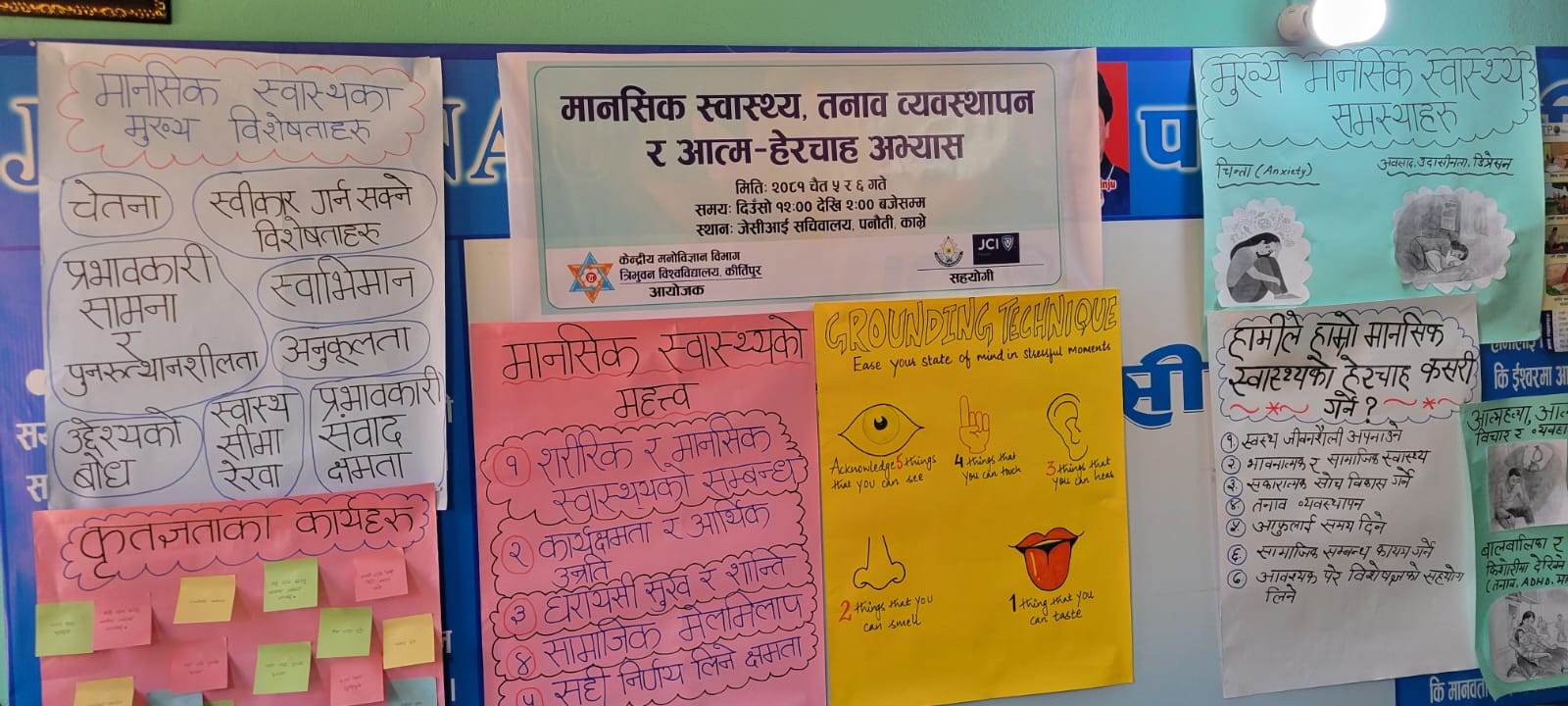
The sessions were designed to be interactive, practical, and accessible. On the first day, participants were introduced to the concept of mental health, its importance in daily life, and common mental health challenges such as stress, anxiety, and depression. Activities such as the “Myth vs Fact” quiz helped address misconceptions and reduce stigma surrounding mental health. Participants also practised the 5-4-3-2-1 grounding technique and engaged in gratitude exercises to promote emotional well-being.
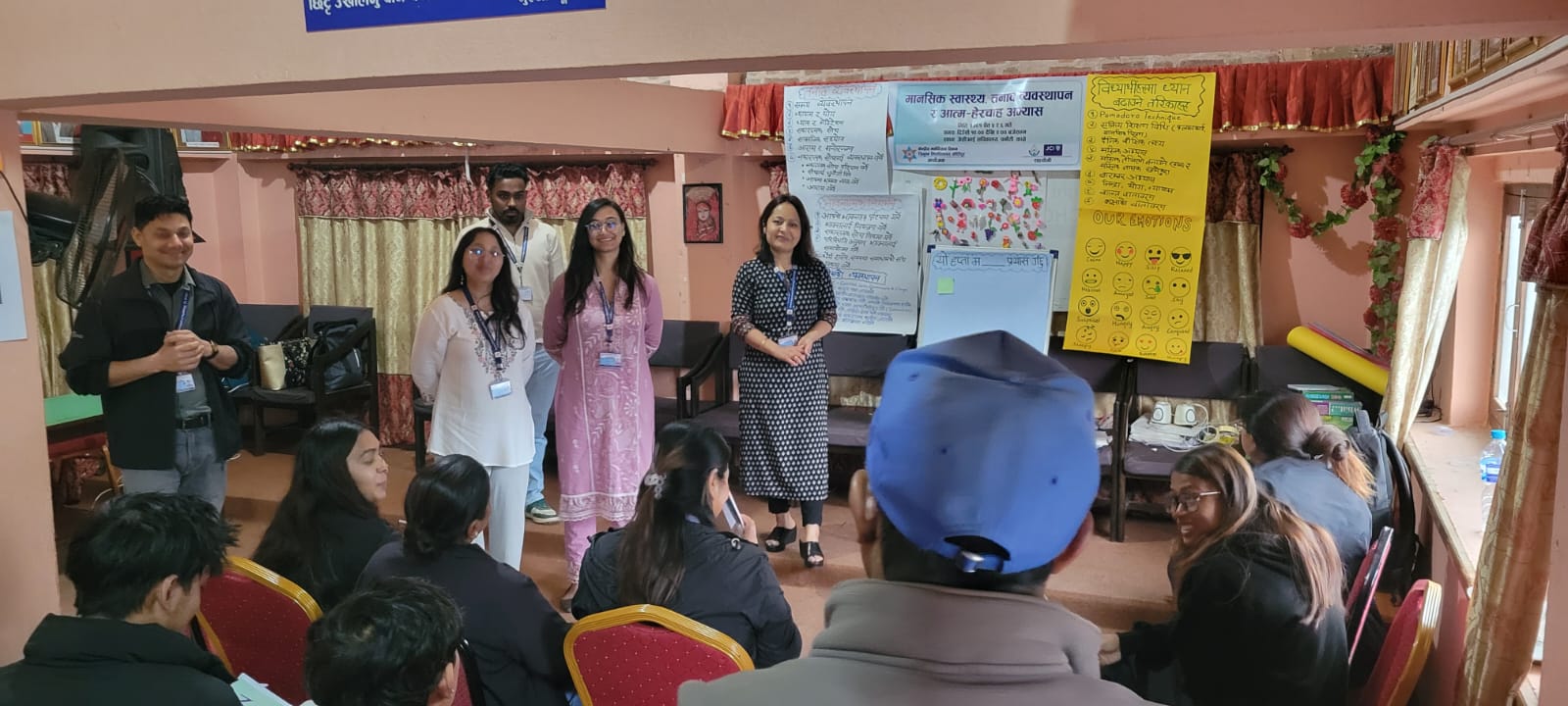
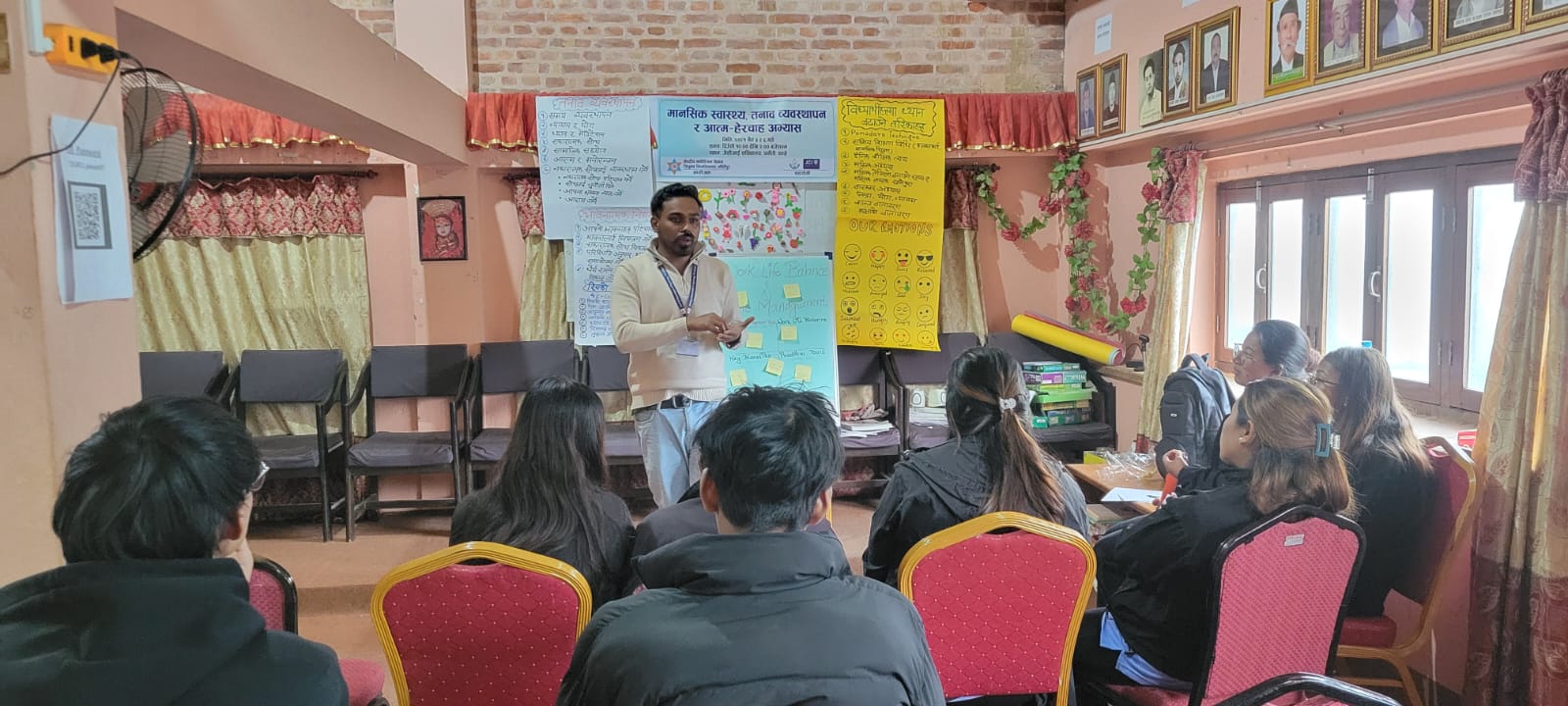
The second day focused on skill development, including stress and anger management, emotional regulation, and maintaining work-life balance. Interactive activities as the self-care wheel and “paper crunch” technique allowed participants to reflect on their personal well-being and explore healthy coping strategies. The session concluded with participants committing to one positive behavioural change they would implement in their daily lives.
The program witnessed active participation and enthusiastic engagement from attendees. Participants reported increased awareness of mental health, improved understanding of coping strategies, and a willingness to apply these techniques in their everyday lives. The intervention also highlighted the importance of community-based initiatives in addressing mental health challenges and promoting psychological well-being.
Despite its short duration, the program successfully raised awareness, encouraged open discussions, and fostered positive attitudes toward mental health. Participants expressed interest in attending similar programs in the future, emphasising the relevance and impact of such initiatives.
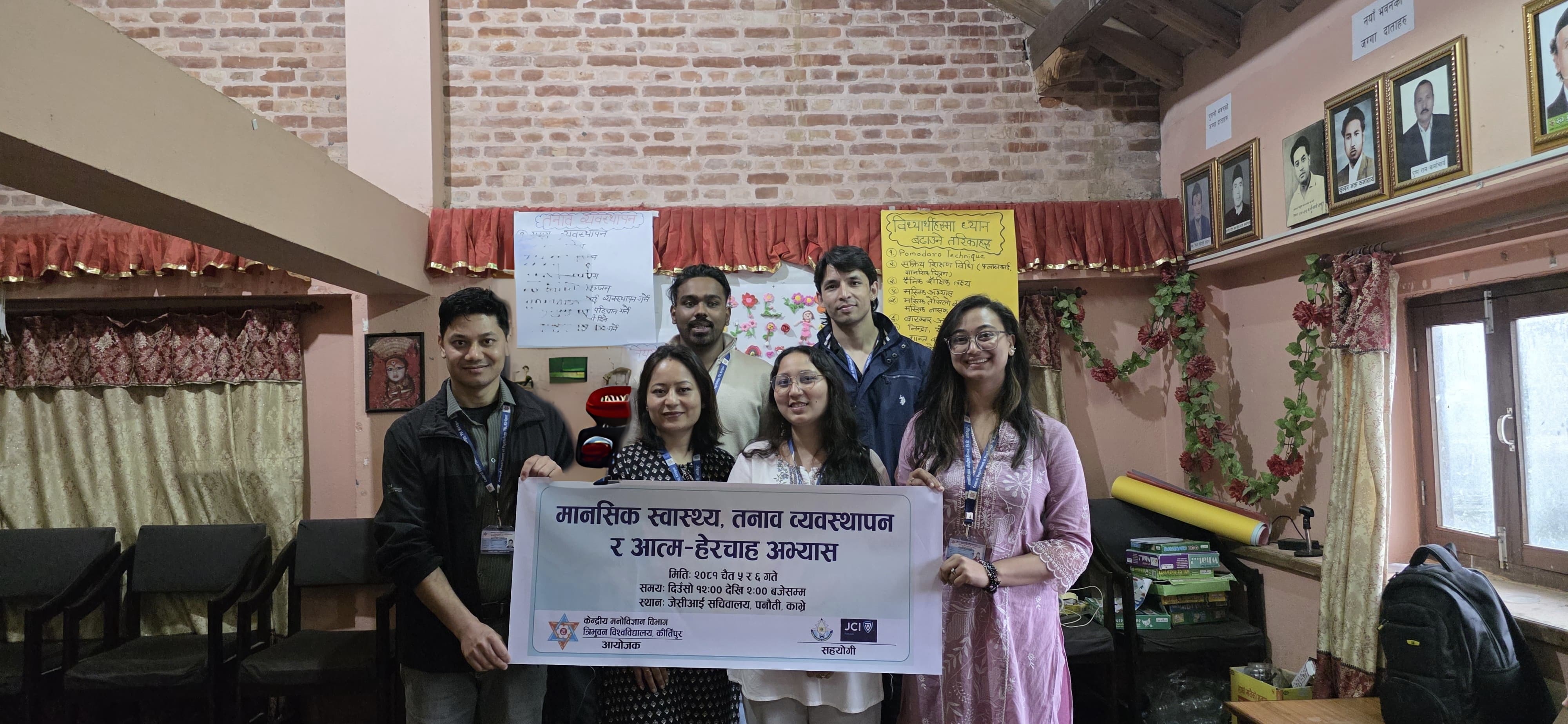
"This field-based intervention reflects the department’s ongoing commitment to bridging academic learning and community engagement and to promoting mental health at the grassroots level," Juliyana added.